Project complete
Sound and Earth: ceramic drums
Three drum directions moved from thrown clay and bisque forms to goat-skin heads, layered glaze, and freehand blue brushwork.
Read the completed storyStudio Notes
Working notes from the studio: glaze tests, bigger forms, partial failures, and the practical decisions that sit behind finished pots.
These are not polished tutorials. They are records of what is being tried, what is worth remembering, and what needs another firing before it becomes a proper conclusion.
Three drum directions moved from thrown clay and bisque forms to goat-skin heads, layered glaze, and freehand blue brushwork.
Read the completed story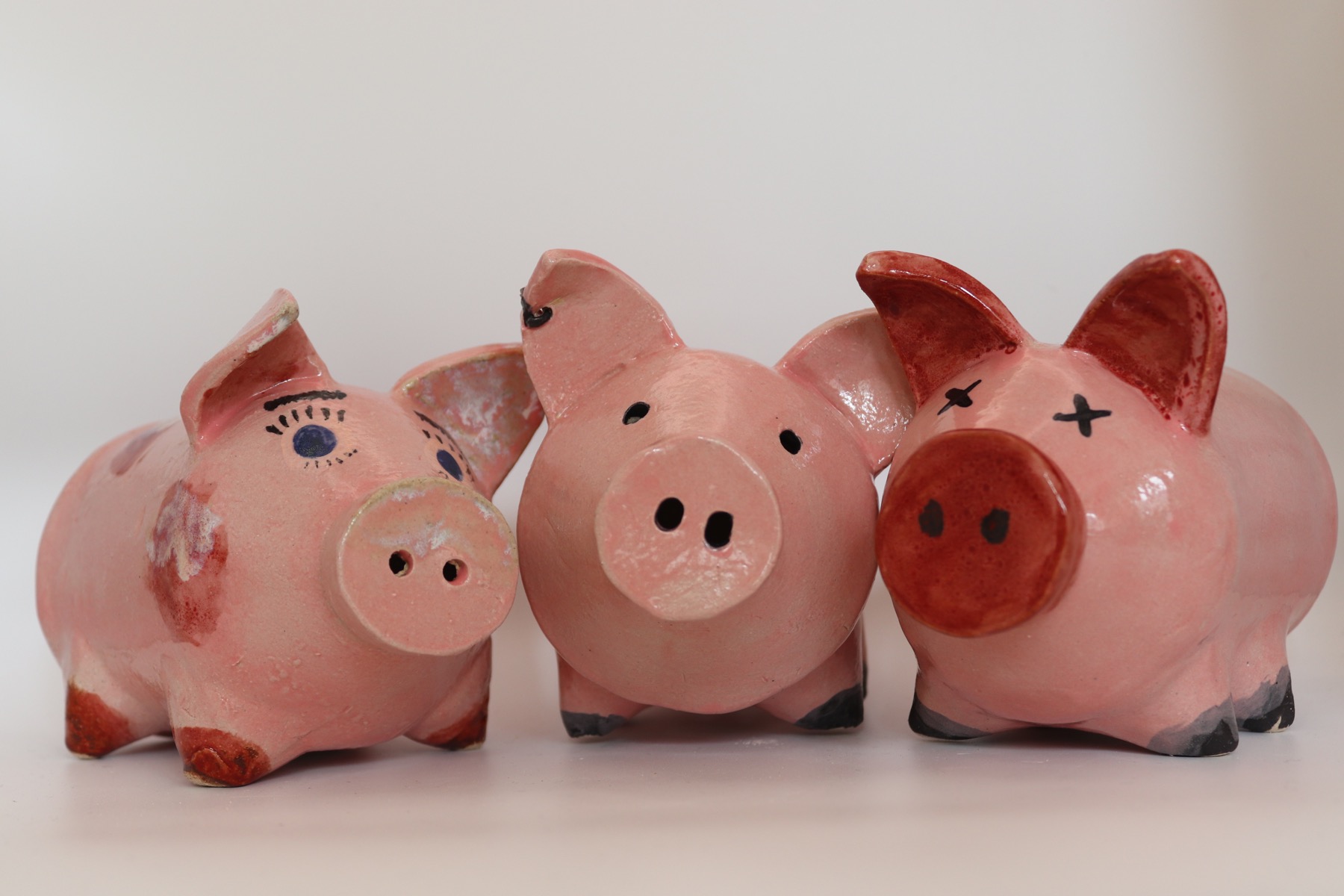
Testing different faces, markings, and glaze ideas early enough to make the final Christmas presents without rushing the firings.
Read the note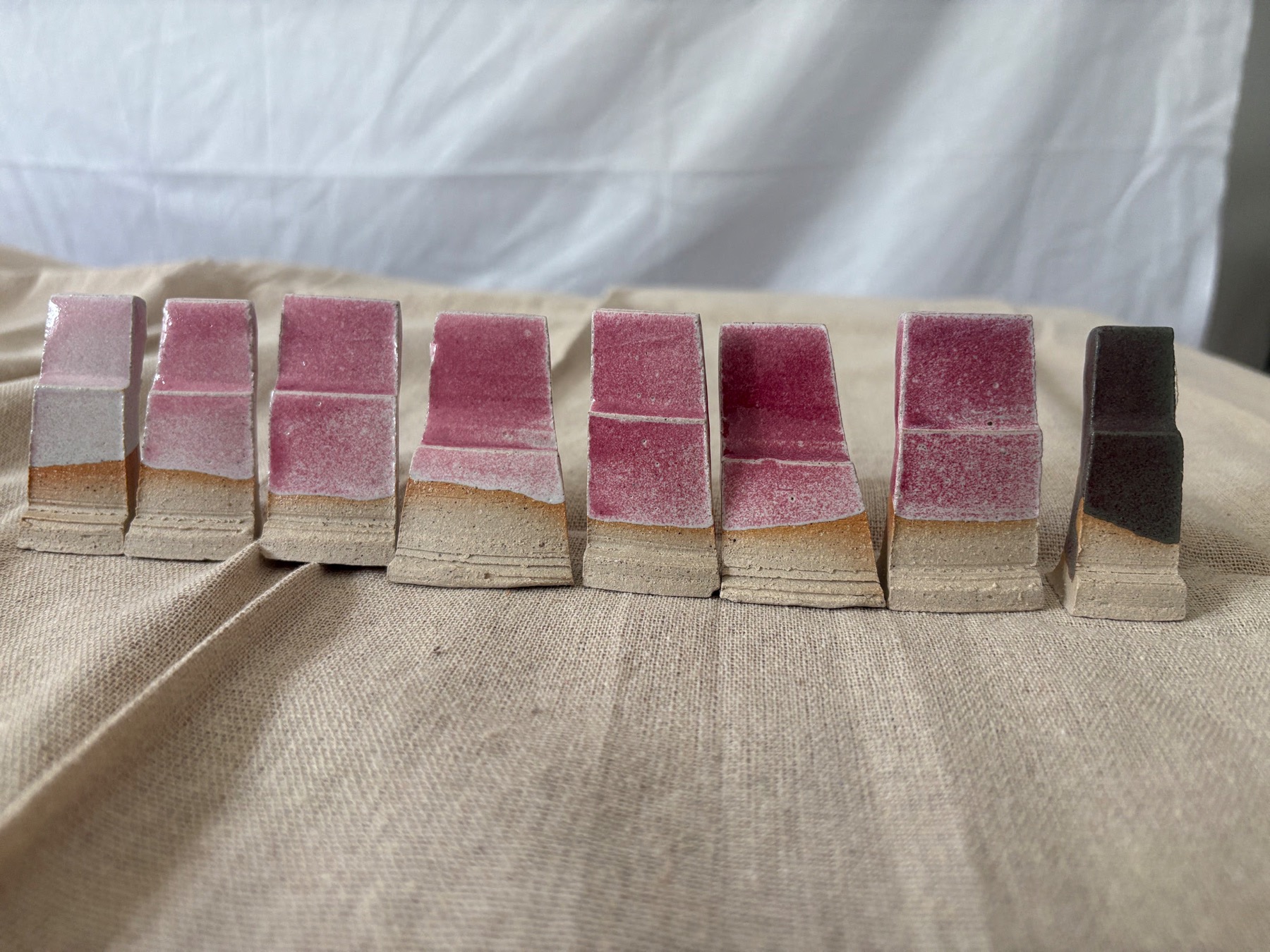
Testing a possible pink at cone 6 by making a small chrome concentrate instead of trying to weigh a tiny addition directly.
Read the noteProject complete
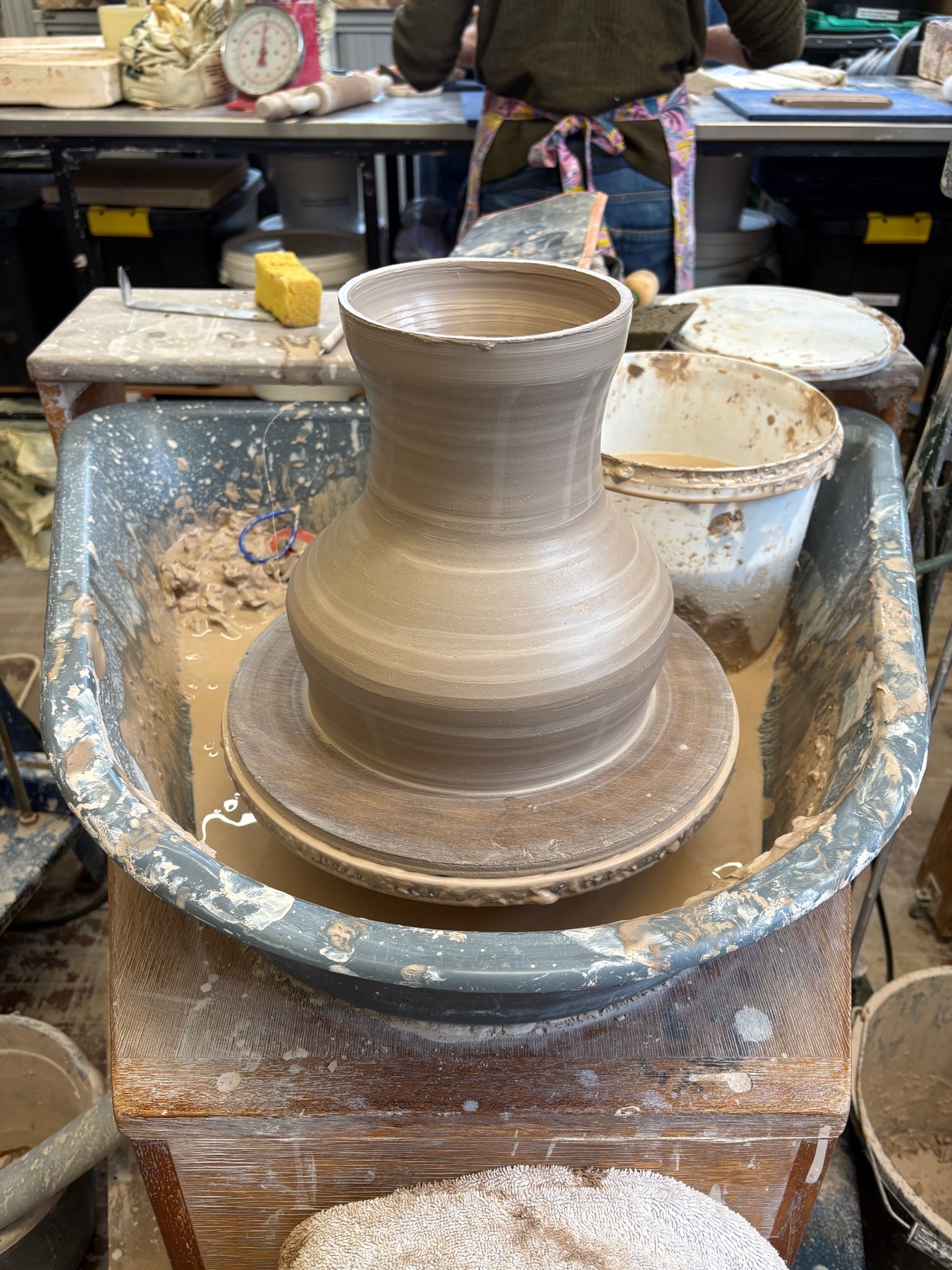
This project began with three approaches to making a drum body from clay. The finished bodhran and darbuka now complete the record from thrown forms and bisque tests to glazed, skinned instruments.
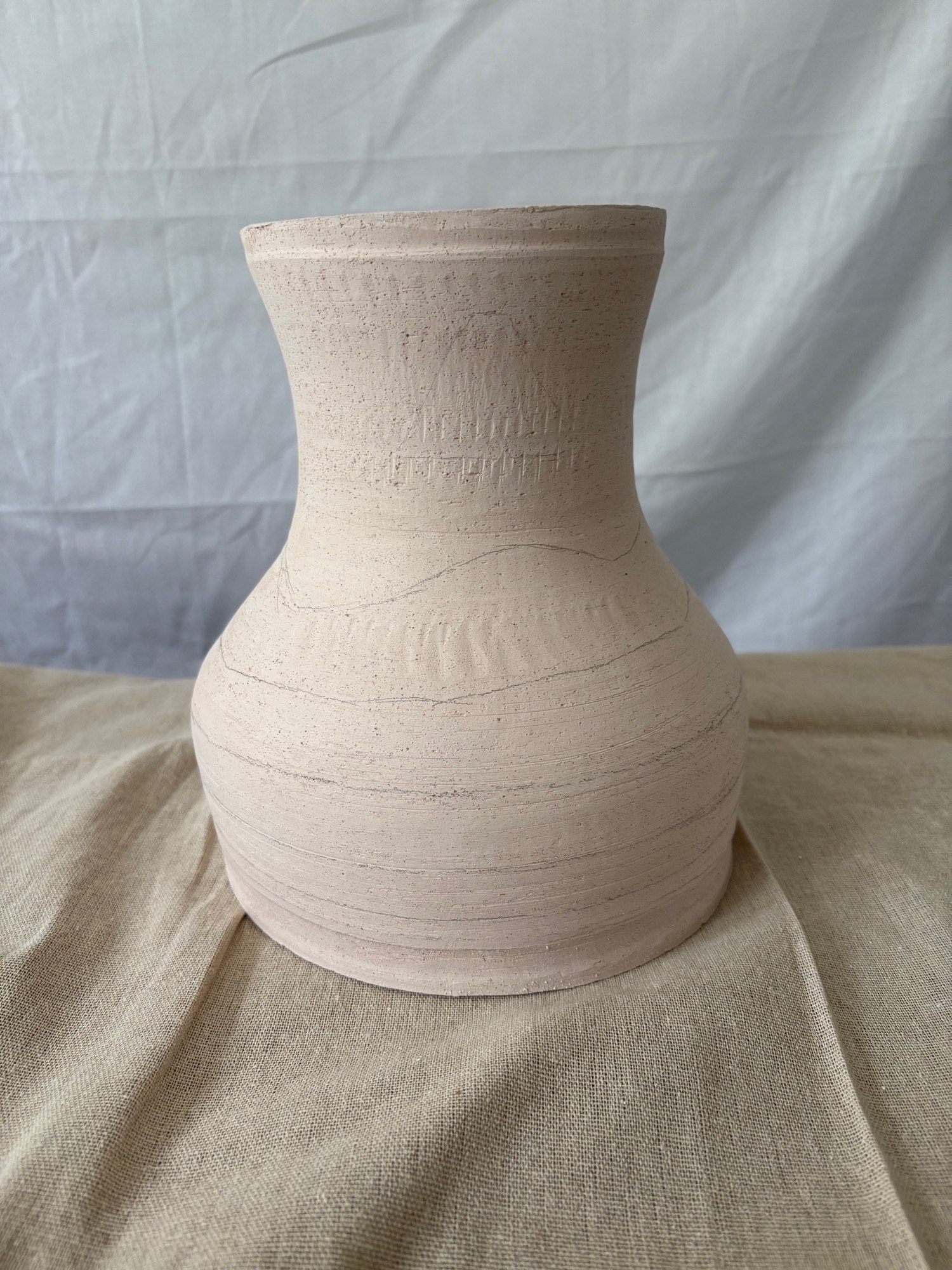
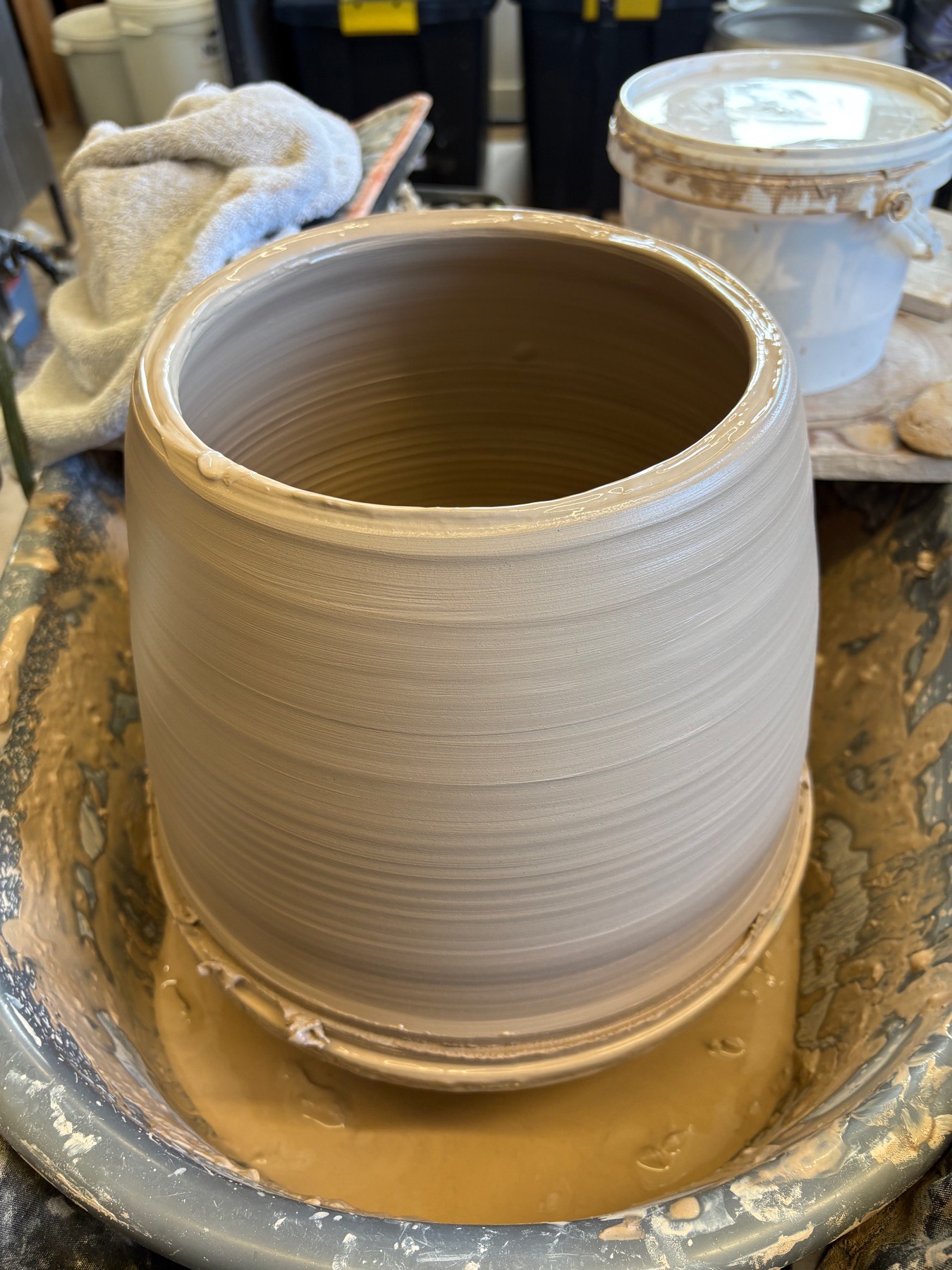
For an August exhibition at the pottery studio, I wanted to see how familiar drum shapes would translate into ceramic forms. The three directions were a shallow bodhran, a goblet-shaped darbuka, and a larger closed form thrown from 3 kg of clay.
The scale made throwing, drying, and firing more demanding than a normal vessel. Each form also needed a strong, usable rim where the skin would eventually be attached.
The bodhran received a layered green glaze, while the darbuka was finished with loose blue brush marks. Goat-skin heads turned the fired ceramic forms into instruments rather than display pots.
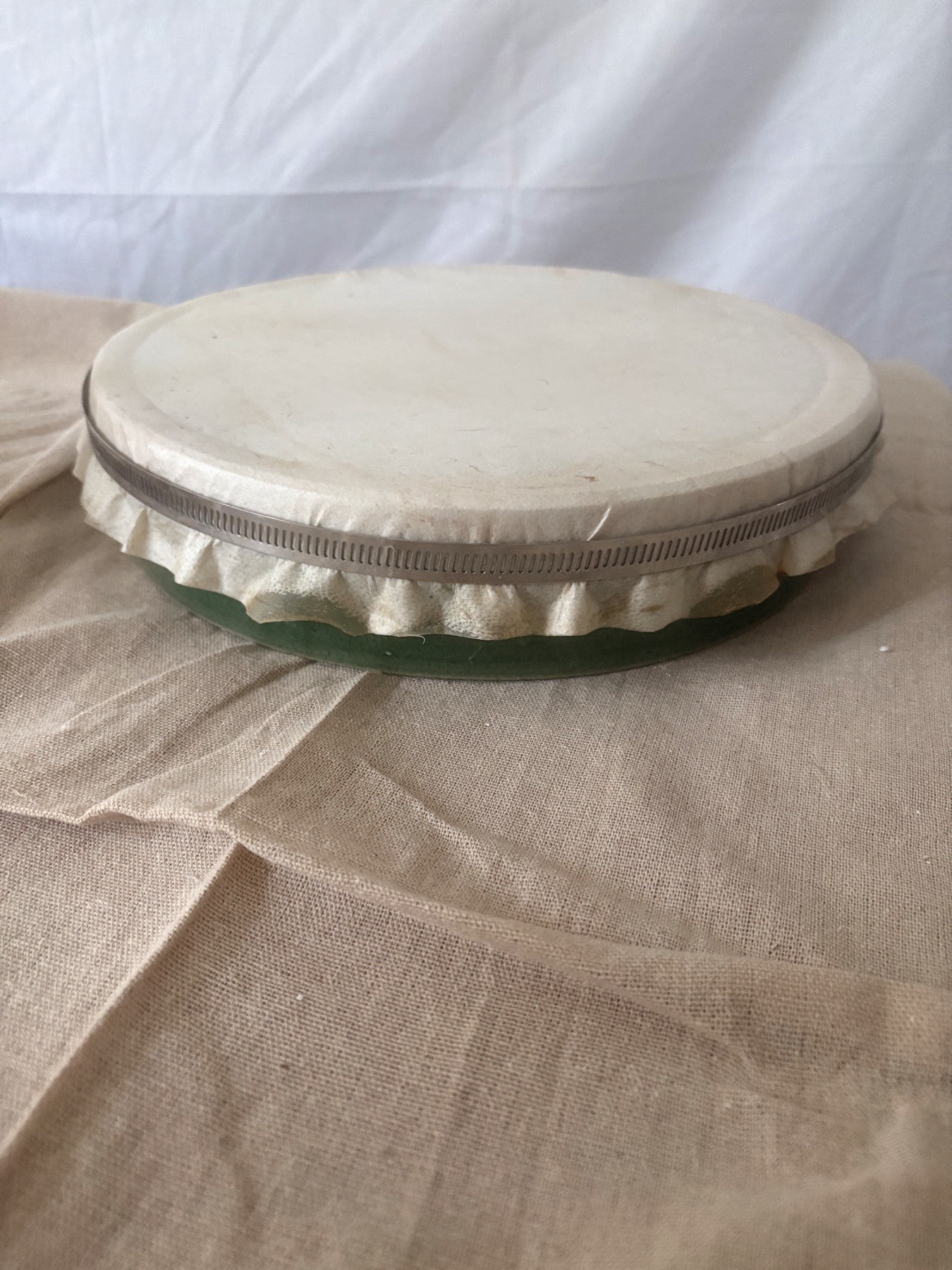
The green bodhran keeps the movement and small breaks in its glaze. The darbuka takes a more graphic route, with changing blue marks and bands around the cream body. The skins are part of the finished forms, not an afterthought added only for the photographs.
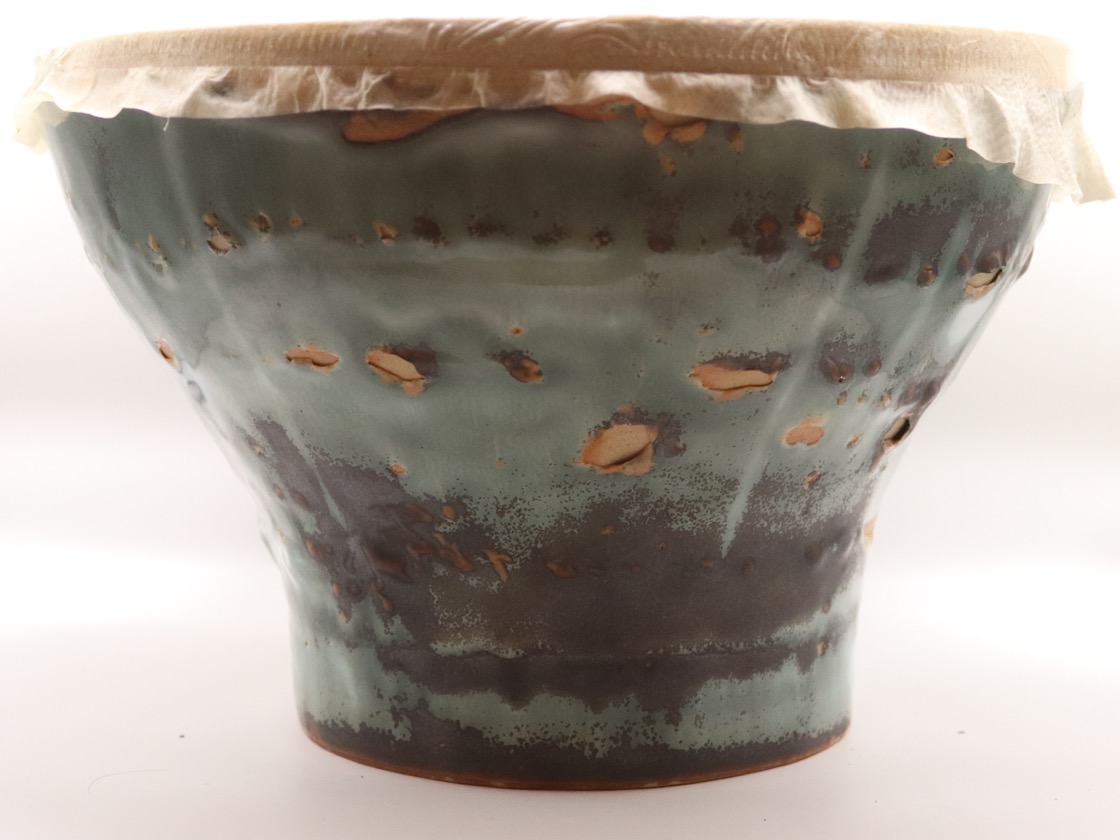
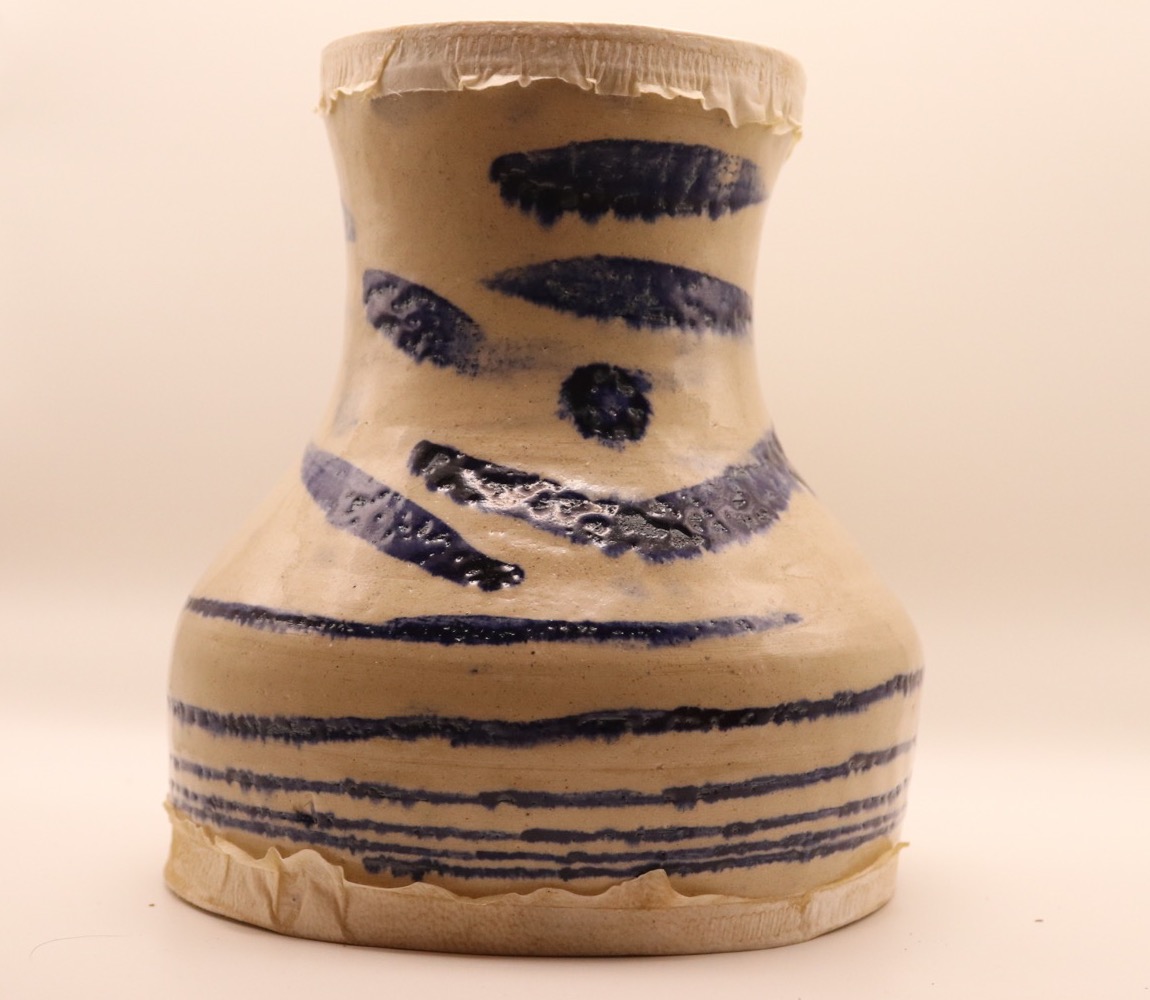
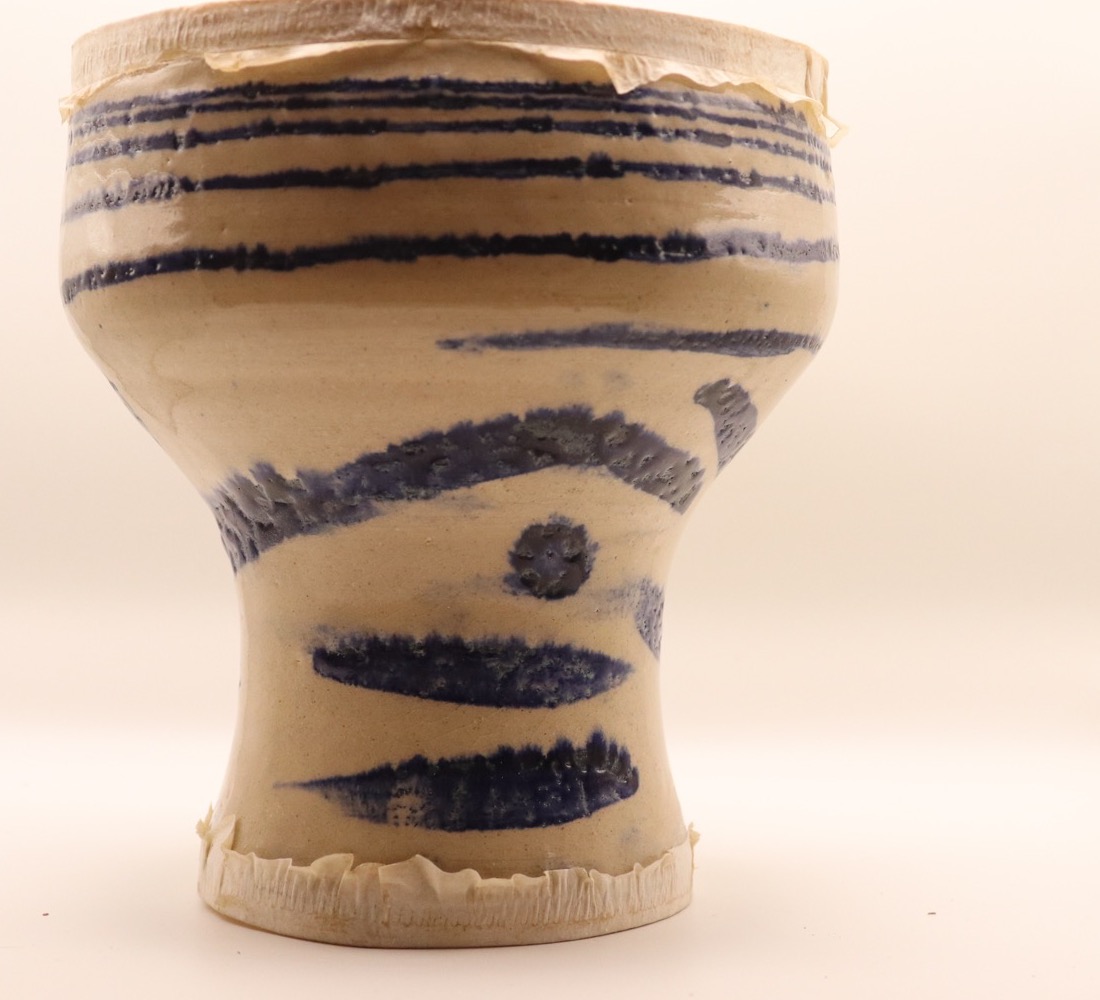
The two finished instruments still read clearly as thrown pots, but the skins and proportions give them a purpose beyond being vessels. The contrasting surfaces also keep the two drum forms distinct rather than treating them as a matching set.
A future batch needs more notes on wall thickness, finished weight, skin tension, and how each choice changes the sound. Those practical comparisons are the next part of the experiment.
Design test · In progress
These pigs are test pieces for Christmas presents for the younger members of my family. Starting in September leaves time to compare the designs and glazes before committing to the final gifts.
A handmade Christmas present has to survive drying, bisque firing, glazing, and a final firing before it can be wrapped. Testing now means a disappointing glaze or awkward construction detail can be changed without turning December into a deadline.
The basic piggy-bank body stays similar while the ears, snouts, feet, coin slots, and facial features change. Small differences are enough to give each pig a separate character.
The finished group tries different pink and red tones, dark feet, patches, eyelashes, glasses, and deliberately simple faces. The aim is to discover which ideas remain clear after firing.
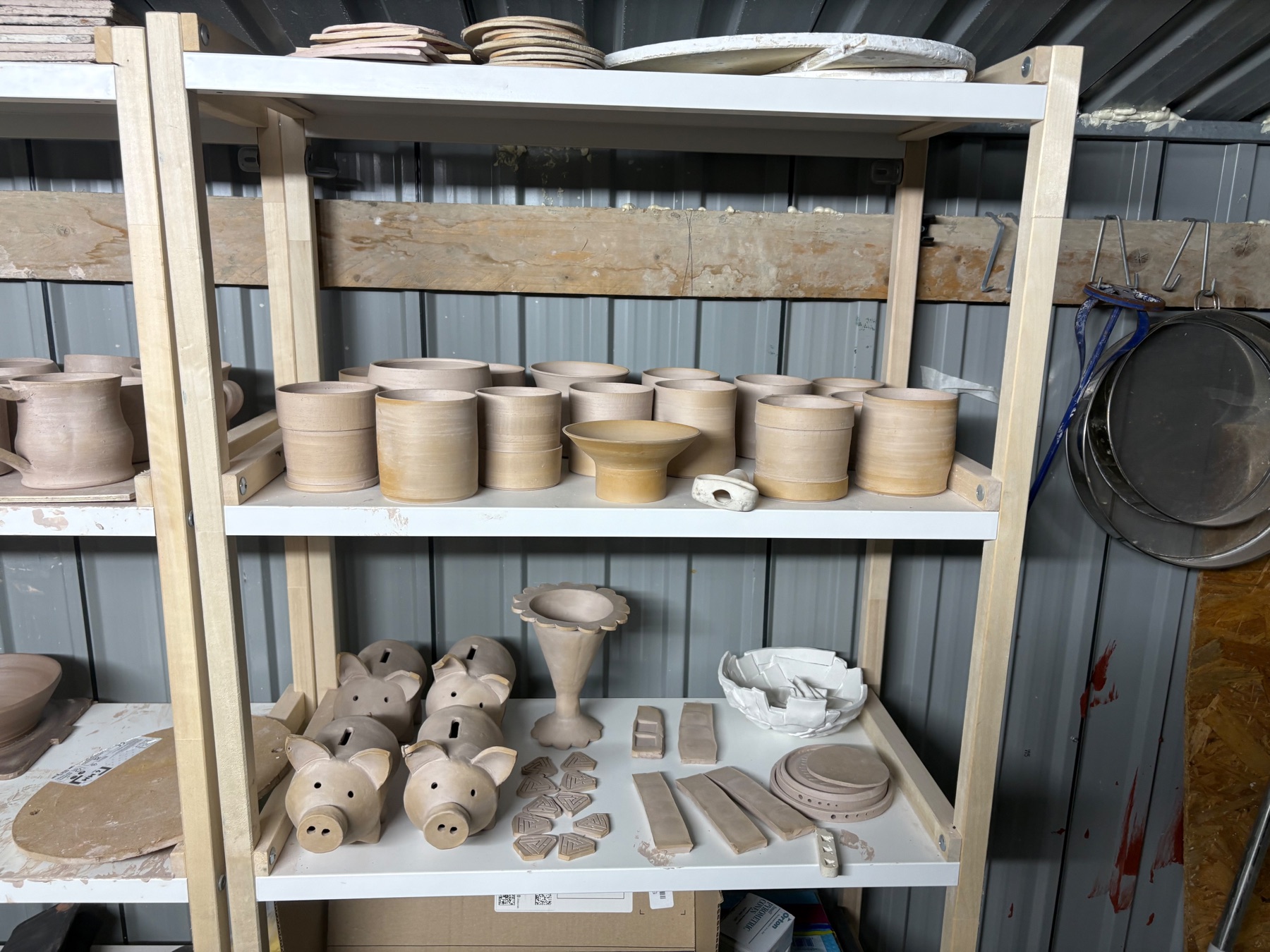
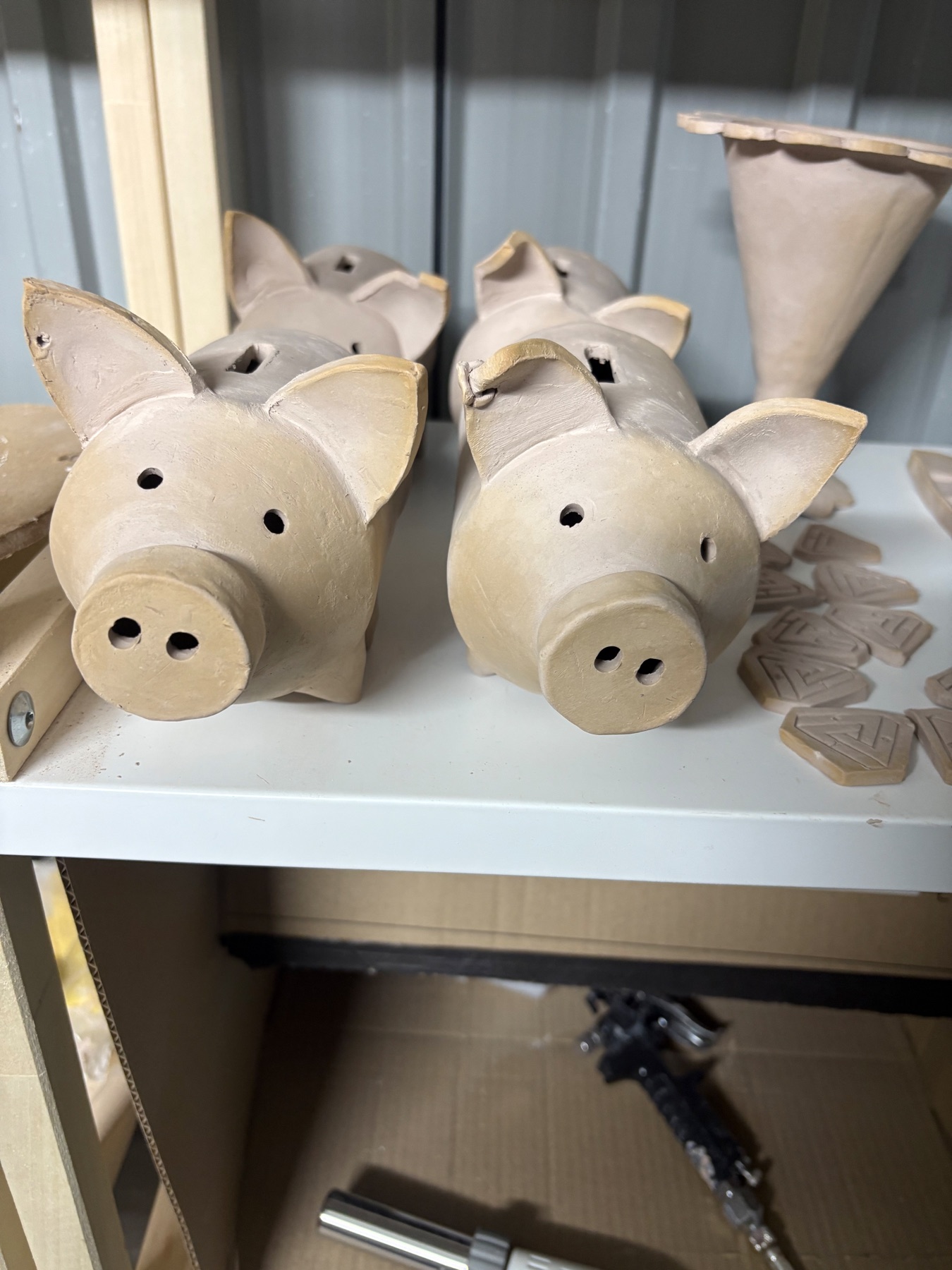
Trying several versions together makes the useful differences much easier to see. Some depend on bold markings, while others work from the shape of the ears, snout, or stance alone.
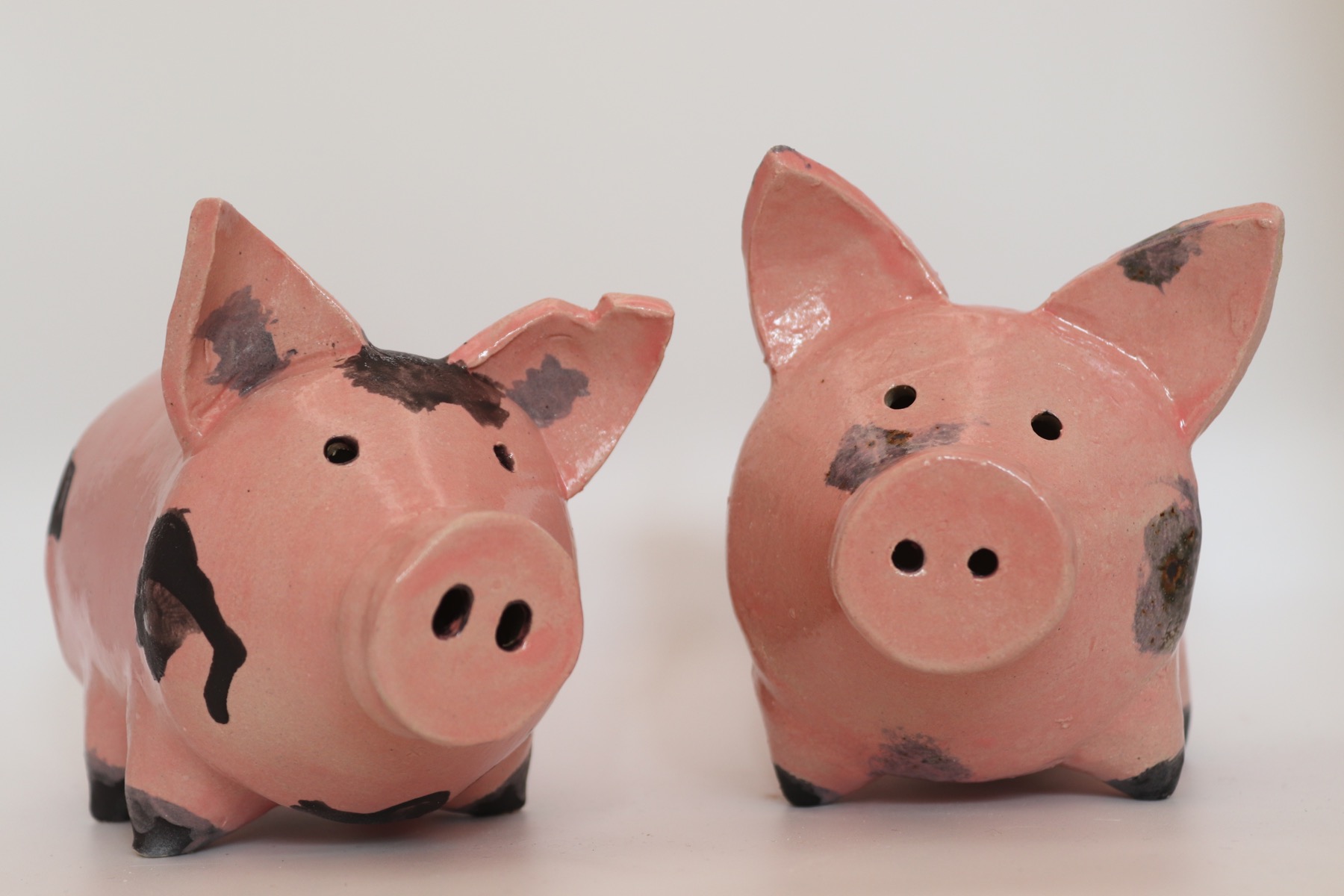
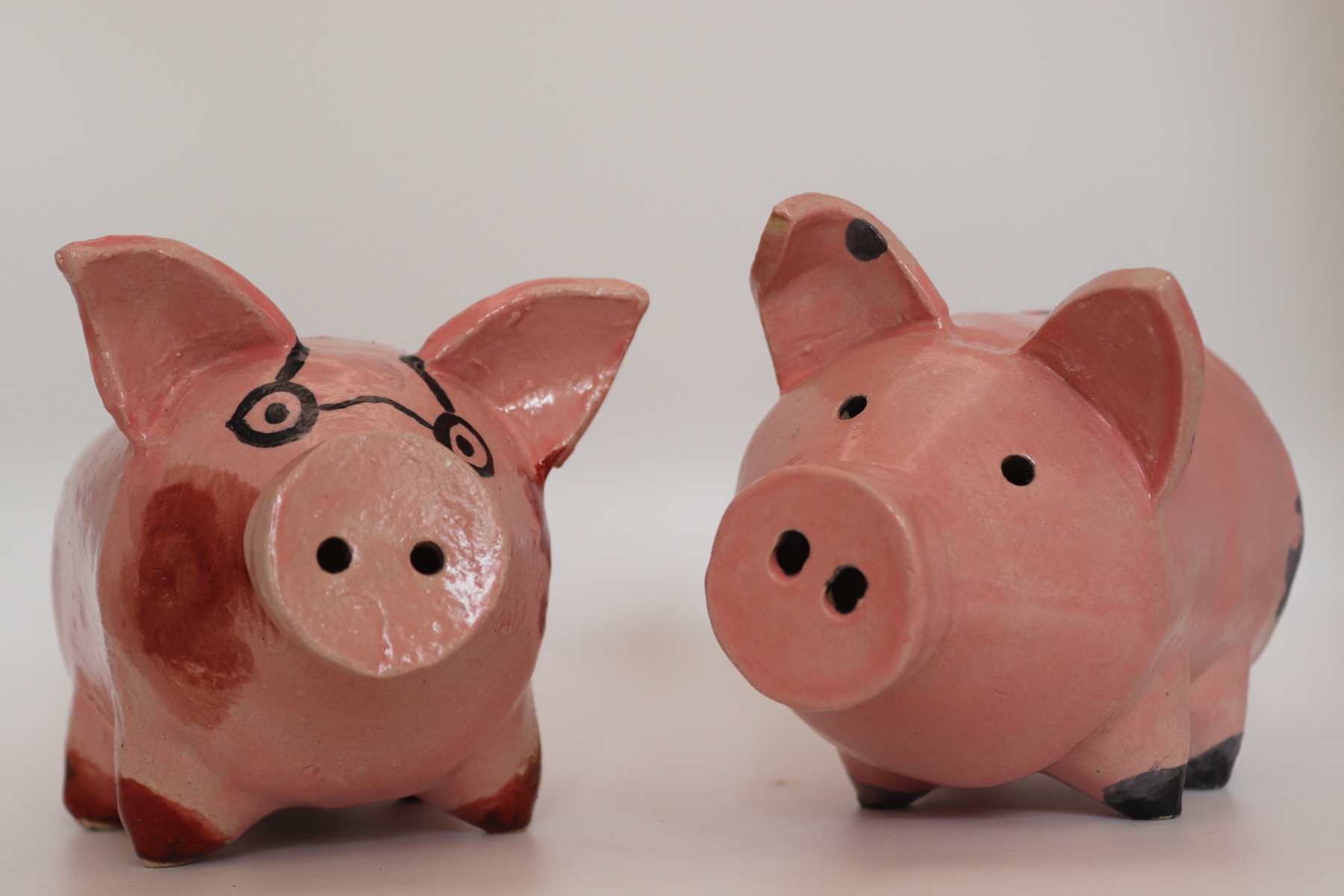
The next step is to choose the most reliable form and the glaze details that survived firing best, then make the final presents with enough time left for drying, two firings, and the occasional kiln surprise.
Glaze test
A first glaze note: testing a possible pink at cone 6 by making a small chrome concentrate instead of trying to weigh a tiny addition directly.
The test was built around a pinkish chrome-tin direction, with tin oxide at 7% and chrome at roughly 0.15% in the finished glaze. The challenge was the chrome: the amount needed was too small to weigh comfortably, so a stronger concentrate made the test line easier to measure.
Made as a 214 g dry batch with 180 ml of water. The measured specific gravity was 1.47, using a tared 10 ml syringe sample of the base glaze.
30 ml of base glaze was mixed with 0.72 g chrome oxide. That gives a small concentrate at roughly 2.4% chrome, which can then be added in measured volumes to the base glaze.
Each test cup started with 20 ml of base glaze, then water was added so every cup reached the same final volume.
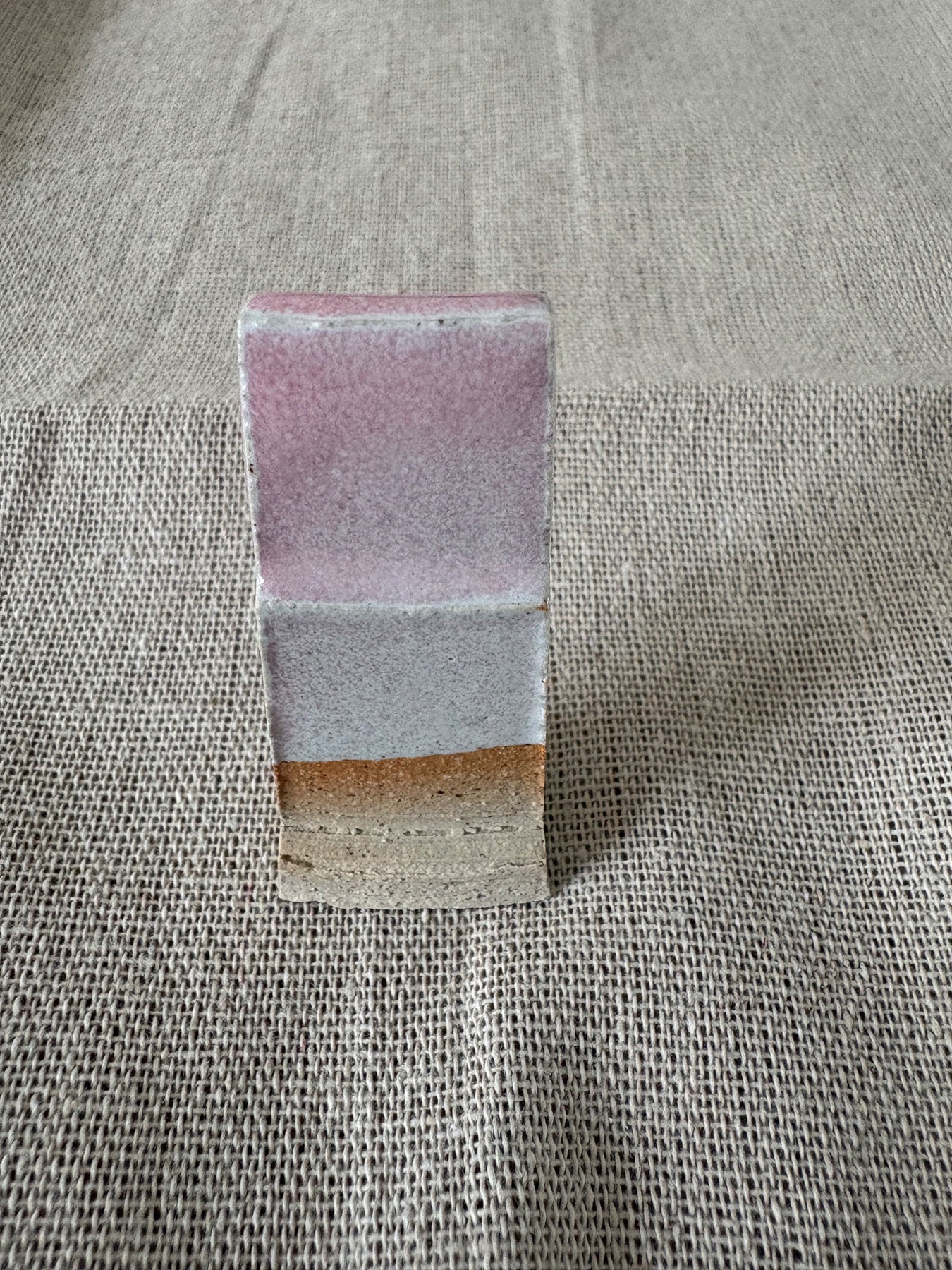
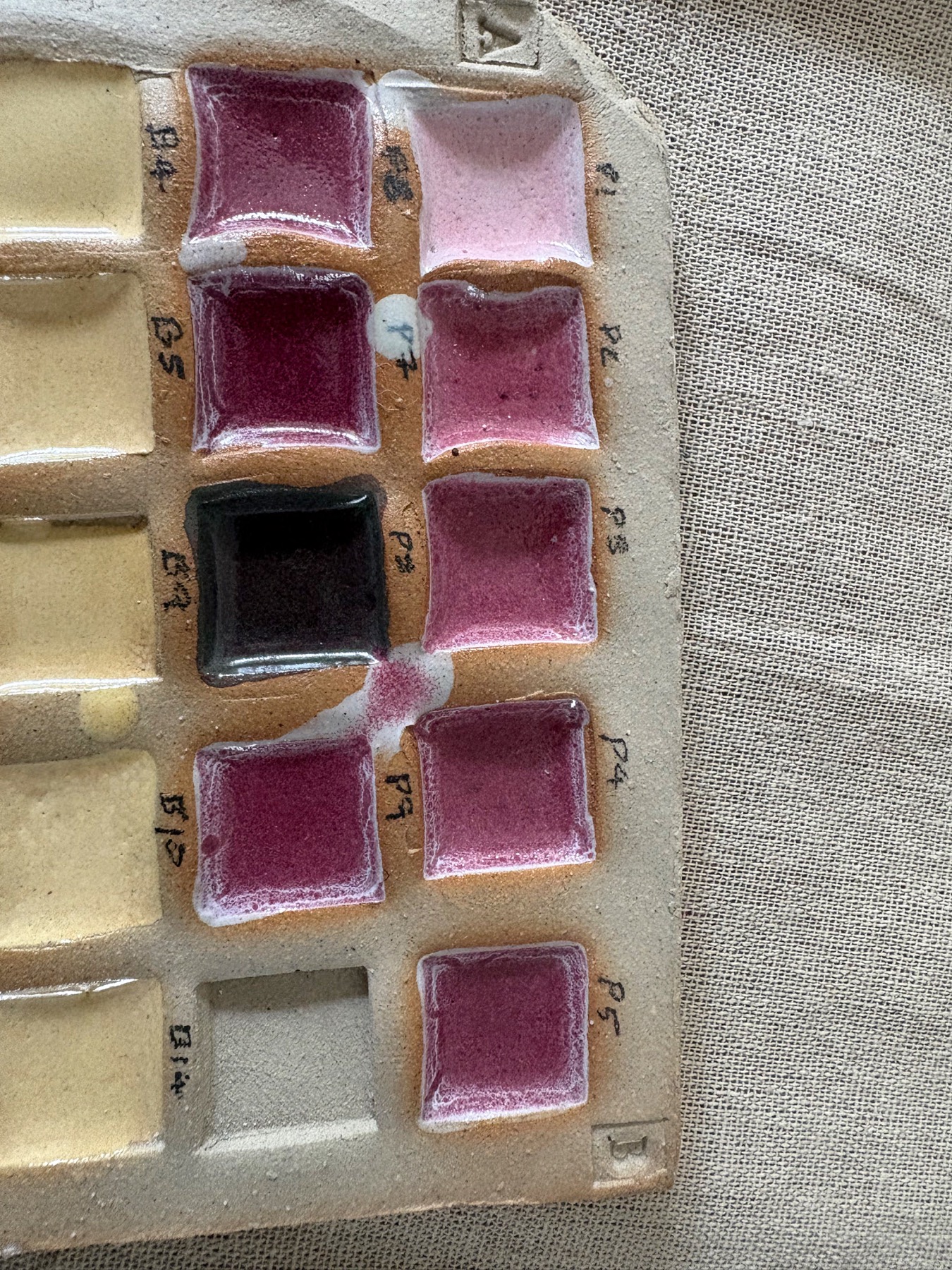
Each tile had three dips: 6 seconds over the whole tile, 6 seconds over the top half, and 6 seconds on the top 5 mm, letting the glaze dry before each dip.
Fired to cone 6: 90°C/hr to 150°C, 130°C/hr to 650°C, 200°C/hr to 1080°C, then 130°C/hr to 1220°C with a 20 minute soak.